
First, Understand: Fever Is Not a Disease
Fever is essentially the body's natural response to fighting infection, not a disease in itself. The temperature rise happens because the brain's thermostat (hypothalamus) raises the body's set point so the immune system can fight germs more effectively.
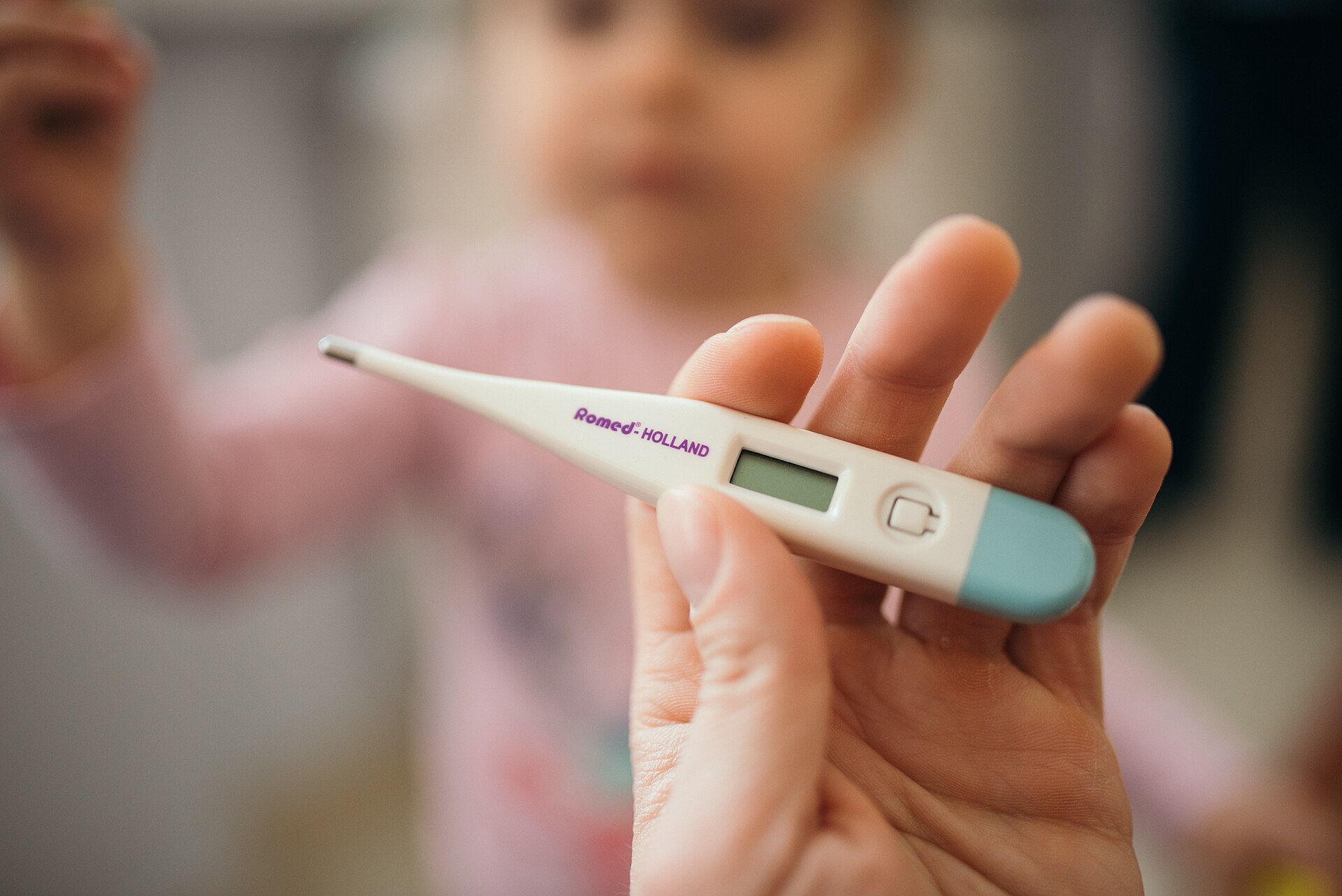
The first step when a child feels warm is to measure the temperature with a thermometer — the recommended method is an armpit (axillary) thermometer. A child has a fever at 38 degrees Celsius or higher. Beyond the number, watch behavior too: an active child is generally safer than a lethargic one, even at a lower temperature.
Warm Compresses, Not Cold Ones
The first aid parents can give at home is a warm compress. Soak a small towel in warm water (not cold water or ice) and place it on the forehead, armpits, and inner thighs for 10–15 minutes. Warm compresses open skin pores so body heat escapes through evaporation.
The Indonesian Pediatric Society (IDAI) stresses that cold compresses are not recommended: they trigger shivering and blood-vessel constriction that actually raise body temperature, besides making the child uncomfortable. Avoid alcohol sponging too, as it risks hypoglycemia.
Fluids, Clothing, and Fever Reducers
During fever, body fluids are lost faster through sweat and breathing. Offer fluids in small but frequent amounts — water, soup broth, oral rehydration salts, or breast milk for babies — and monitor urination frequency as a hydration gauge. Dress the child in thin cotton clothing and avoid thick blankets.
Fever reducers such as paracetamol may be given when the child seems uncomfortable, dosed by body weight per medical advice. IDAI advises against alternating paracetamol and ibuprofen, as it is not proven more effective and risks dosing confusion. Never give aspirin to children due to the risk of Reye's syndrome.
When to See a Doctor
Take the child to a doctor promptly if fever occurs in a baby under three months, lasts more than three days, exceeds 40°C, or the child shows dehydration signs such as infrequent urination and dry mouth.
Other red flags needing immediate medical help include febrile seizures, neck stiffness, breathing difficulty, a skin rash that doesn't fade when pressed, or decreased consciousness. When in doubt, consult a doctor or the nearest health facility.


