Houthi Attack on Riyadh Airport Kills 13
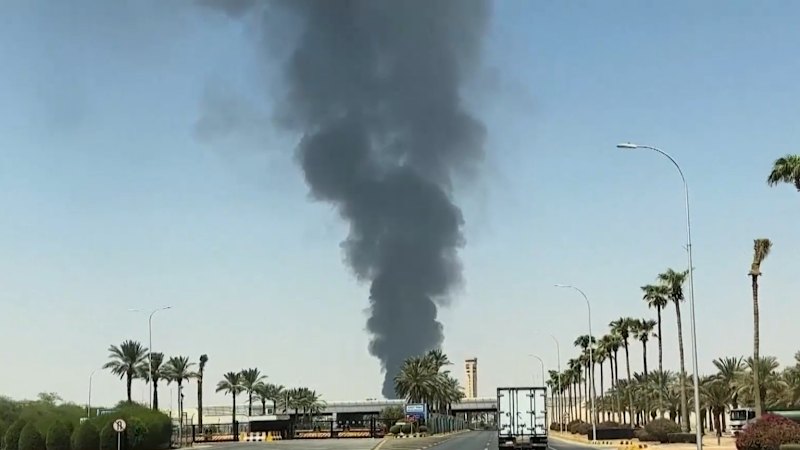
Yemen's Houthi group launched a deadly attack on King Khalid International Airport in Riyadh, Saudi Arabia, on Saturday (10/10/2026). Saudi civil aviation authorities recorded at least 13 people killed and 309 others wounded in the attack.
It was described as the deadliest attack in Saudi Arabia in more than a decade. Saudi state television footage showed dozens of pilgrims lining up at one of the airport's gates heading for the two holy cities when a bright orange flash sent people running in panic, while part of the roof appeared to collapse. The airport was closed after the attack and its flight operations suspended.
The dead came from multiple countries, including Saudi, Bangladeshi, American, Egyptian, Jordanian, Syrian, Palestinian, Sudanese, and Pakistani nationals, according to local authorities cited by international media.
Four Attacks in Five Days
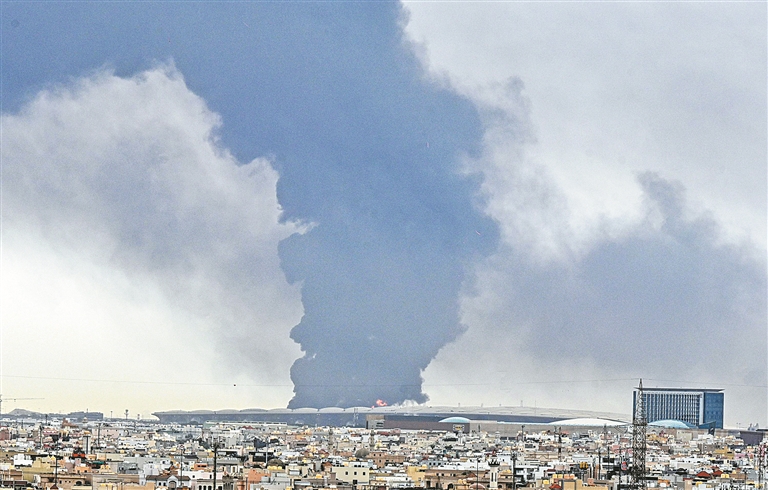
The 10 October attack was not the first. Saudi authorities recorded four attacks in five days: on 7 October one person was killed and eight wounded, on 8 October three were killed including an airline pilot, on 10 October 13 were killed, and on 11 October one person was killed and 11 others wounded when a projectile struck Terminal 4 and triggered a fire.
Disruption to Saudi civil aviation widened after the Houthis claimed strikes on at least five airports in early October 2026: King Khalid International in Riyadh, King Fahd International in Dammam, Abha International, King Abdullah International in Jazan, and Najran Airport. The Saudi-led coalition said its air defenses intercepted a cruise missile near King Khalid Airport, a drone in the Eastern Province, and a ballistic missile launched toward Khamis Mushait.
Saudi Coalition Calls Attack a War Crime
The Saudi-led Coalition for the Restoration of Legitimacy in Yemen strongly condemned the attack. Coalition spokesman Maj. Gen. Turki Al Malki said the attack on Saturday, 10 October 2026, directly targeted the airport's passenger terminal and caused deaths and injuries.
"Under international humanitarian law, this act is entirely a war crime," Al Malki stressed. He called it a vile act contrary to values, principles, and ethics, and affirmed that the coalition's joint forces command would respond to the attack firmly, in a measured manner, and in line with international humanitarian law.
Two Indonesians Wounded, Contingency Plan Prepared
Indonesia's Foreign Ministry prepared a contingency protection plan for 581,000 Indonesian citizens in Saudi Arabia — comprising 351,070 residents and 229,930 pilgrims — following the attack. "The contingency plan is ready and will always be adjusted to developments on the ground," said Heni Hamidah, the ministry's Director for Indonesian Citizen Protection, on 11 October 2026.
The Indonesian Embassy in Riyadh confirmed two Indonesians suffered minor injuries on 11 October 2026 and were treated at two hospitals in Riyadh before being discharged the same day. As of 14 October, no Indonesian nationals had died. The Foreign Ministry urged all Indonesians in Saudi Arabia to stay vigilant, avoid airport areas, and follow local authorities' guidance.