How to Check the Dollar-to-Rupiah Rate Today
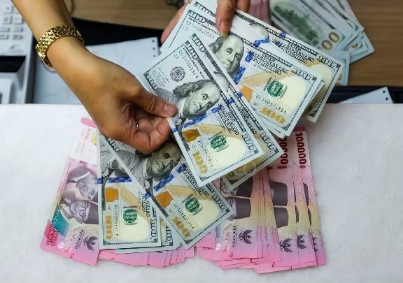
People exchanging US dollars into rupiah — for travel, fund transfers, or just tracking savings — often ask how much a given dollar amount is worth in rupiah. On Wednesday, October 14, 2026, Bank Indonesia's JISDOR reference rate put the rupiah at Rp17,930 per US dollar, while live TradingView data showed Rp17,925.0 at 09:30 WIB.
Two reference sources track USD/IDR in real time. First, Bank Indonesia's JISDOR, published every business day at 15:15 WIB on bi.go.id — the benchmark most Indonesian financial institutions use. Second, TradingView, which provides live USD/IDR data with historical charts, so intraday moves and long-term trends can be monitored directly.
Buy-sell rates at banks, banking apps, and money changers can be checked with each provider. Rates you actually receive may differ slightly because each provider adds a margin or spread as a service fee.
US Dollar to Rupiah Conversion Table, October 14, 2026
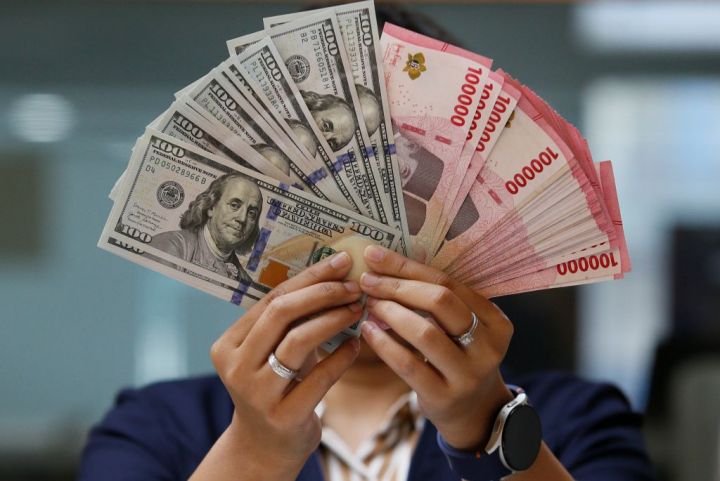
At the JISDOR reference of Rp17,930 per US dollar, sample conversions for October 14, 2026: 1 USD = Rp17,930; 5 USD = Rp89,650; 10 USD = Rp179,300; 25 USD = Rp448,250; 50 USD = Rp896,500; 100 USD = Rp1,793,000; 250 USD = Rp4,482,500; 500 USD = Rp8,965,000; 1,000 USD = Rp17,930,000; 5,000 USD = Rp89,650,000.
In the session, USD/IDR moved between Rp17,885.0 and Rp17,930.0, last at Rp17,925.0 — up 0.17 percent from the previous close. These figures follow Bank Indonesia's official reference; actual transaction rates at banks or money changers follow each provider's policy.
Remember the rate keeps moving with the forex market. For large transactions, compare rates across banks and licensed money changers before exchanging, and stick to licensed changers to avoid unfair rates.
What Moves the Dollar-Rupiah Rate
The rupiah's rate against the US dollar moves daily with forex market mechanics, driven by dollar supply and demand at home and evolving global sentiment. Five fundamental drivers set its direction: US Fed monetary policy — hawkish or dovish signals affect the appeal of dollar-denominated assets; Bank Indonesia policy via the BI Rate and market intervention; Indonesia's trade balance — a surplus adds dollar supply and strengthens the rupiah, a deficit does the opposite; global risk sentiment — in risk-off conditions investors flock to safe assets like the US dollar; and commodity prices — as an exporter of coal, palm oil, and nickel, stronger global commodity prices generally support the rupiah.
Bank Indonesia continuously monitors daily JISDOR moves as a basis for market intervention when needed, keeping rupiah volatility contained. That mix of global and domestic factors is what makes the dollar-rupiah rate fluctuate day to day.