Bahlil Floats Nickel Smelter Moratorium
The Indonesian government is considering a moratorium on new nickel smelters that produce intermediate goods. Downstreaming Coordinating Minister and Energy and Mineral Resources (ESDM) Minister Bahlil Lahadalia said the move aims to curb oversupply risks in the global market.
"We are considering minimizing, or even imposing a moratorium on, the intermediate nickel smelter industry," Bahlil said on the sidelines of the Investor Daily Summit 2026 in Jakarta on Wednesday (10/7/2026).
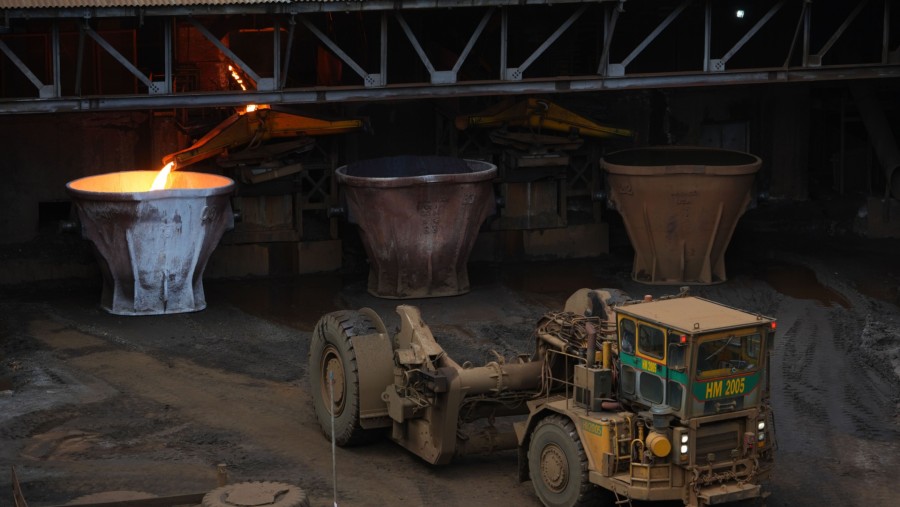
Bahlil noted that 50 to 60 percent of the country's nickel smelters still produce intermediate goods, including ferronickel, nickel pig iron (NPI), nickel matte, and mixed hydroxide precipitate (MHP).
2.5-Million-Ton Oversupply Pressures Prices
The moratorium option is being weighed amid mounting global nickel oversupply. Accumulated excess nickel supply worldwide is estimated to have surpassed 2.5 million tons, pressuring commodity prices.
"It's oversupply, which is why prices are falling. We can consider starting to minimize the intermediate industry, perhaps even a moratorium, while pushing industries that produce finished downstream products," Bahlil said.
ESDM Ministry data records 190 nickel smelter projects in Indonesia with processing capacity exceeding 320 million tons of raw material per year. Meanwhile, the 2026 nickel ore production quota under the Work Plan and Budget (RKAB) was set at 260 to 270 million tons, down from last year's realized production of 320 million tons.
Downstreaming Pushed Toward Finished Products
The investment-restriction plan aligns with Government Regulation (PP) No. 28/2025 on risk-based business licensing through Industrial Business Licenses (IUI). The provision targets nickel processing facilities using pyrometallurgy such as rotary kiln electric furnaces (RKEF) and hydrometallurgy via high pressure acid leaching (HPAL) that produce intermediate goods.
Going forward, the government will select which industries continue and which face moratoriums, prioritizing those that directly produce finished downstream products. Bahlil said his team is preparing a formal recommendation to President Prabowo Subianto.
Arif Perdana Kusumah, chairman of the Indonesian Nickel Industry Forum (FINI), called restricting intermediate-product smelters a strategic step to organize the upstream-downstream industrial ecosystem and balance production capacity with global demand.