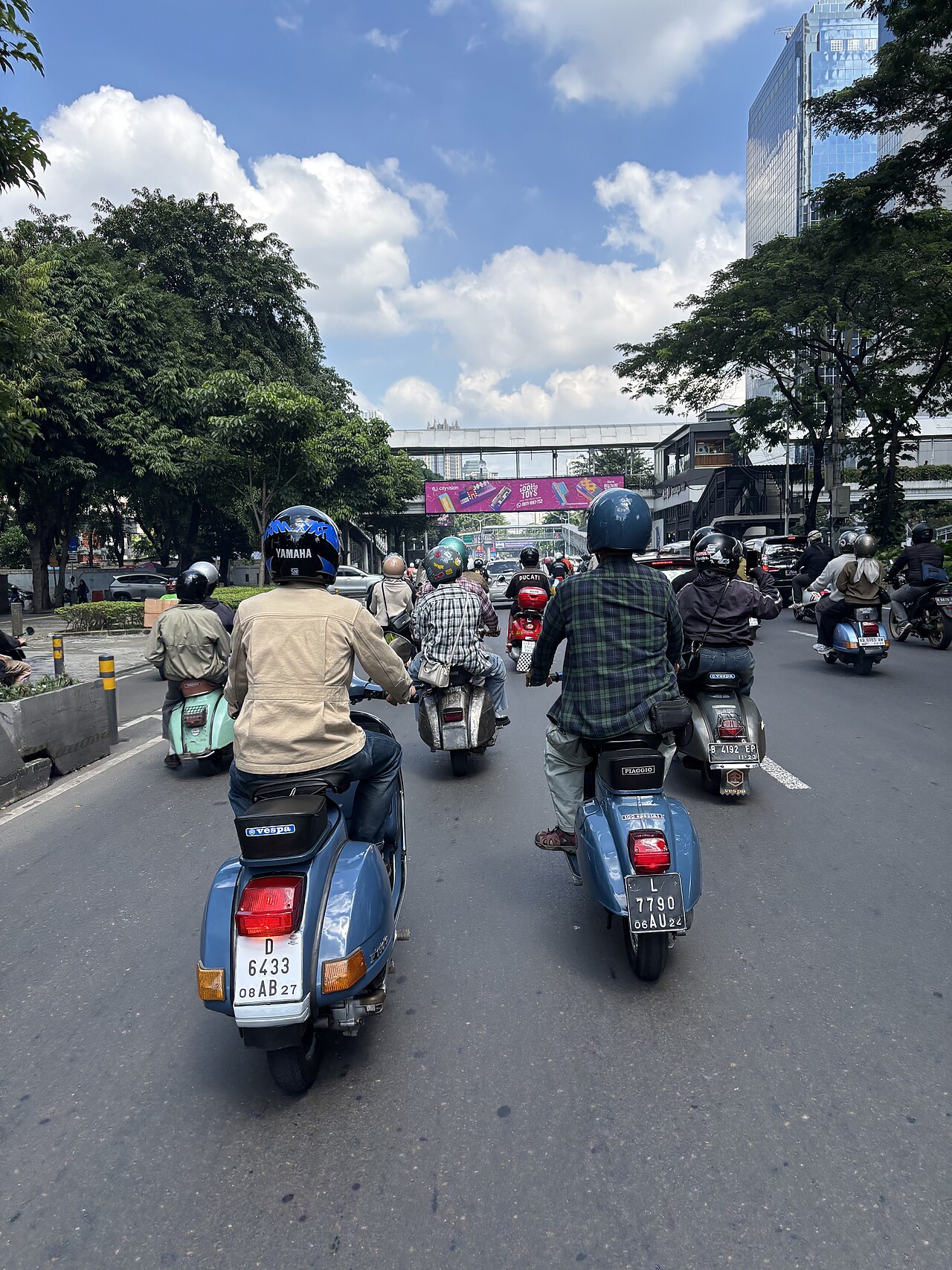
Know the Automatic Scooter Controls
Before hitting the road, memorize the controls. The throttle is the right-hand grip — twist inward to go. The right lever controls the front brake, the left lever the rear brake. The electric starter button is also on the right hand, while the ignition key has OFF, ON, and LOCK positions.
These two things are the key to riding a scooter: throttle control and both brakes. With no clutch or gears, all attention can focus on balance and road conditions.
How to Start and Pull Away
Turn the key to ON, make sure the side stand is raised (many scooters won't start with it down). Squeeze a brake lever, then press the starter button until the engine fires. Let the engine run for about a minute.
To pull away, sit balanced, release the brake slowly, then twist the throttle just a little — the bike will move immediately. Never snap the throttle open or the bike can jump. The trick: keep your wrist slightly lowered so you don't accidentally twist too hard.
Safe Throttle, Braking, and Turning Technique
Use both brakes together every time you brake for effective stopping. Apply progressive braking: touch lightly first, add pressure as needed, then release gently just before fully stopping so the suspension doesn't bounce. Avoid grabbing the front brake suddenly while leaned over, as the tire can slip.
When turning, signal, look toward the end of the turn (the bike follows your gaze), and lean your body appropriately. On descents, don't close the throttle fully so the engine keeps helping with braking.
Practice Safely Before the Main Road
Practice in an empty field or quiet parking area before riding on main roads. Ask an experienced rider to accompany you. Drill smooth starts, smooth stops, and turns until they feel natural without jerks.
Always wear an SNI helmet, jacket, gloves, and closed shoes. Before departing, check tire pressure, brake function, and engine oil. Obey traffic signs — skilled riding also means road discipline.