
Curfews Extended to Several Cities
French authorities expanded nighttime curfews to several cities and regions after protests against the rising cost of living escalated into rioting and looting. The measures previously enforced in Paris now include Nice, Lyon, Gironde, and four districts in northern France, according to a BFMTV report cited by Detikcom on Tuesday (20/10/2026).
The widened restrictions follow instructions from French Prime Minister Sebastien Lecornu to prefects to impose local, partial curfews in response to the unrest. Lecornu also announced an operation aimed at bringing those responsible for violence and looting to justice.
Details of Regional Restrictions
In Paris, night activity restrictions apply to all residents around Place de la Republique and the streets of the Les Halles area, from 10:00 PM to 6:00 AM local time. Authorities also prohibited demonstrations in several areas of the capital from 8:00 PM to 6:00 AM local time.
In Lyon, a curfew was imposed in parts of the downtown Presqu'ile district from 9:00 PM to 6:00 AM local time. The policy in Nice targets minors in the city center during the same hours. Nice Mayor Eric Ciotti stated the policy aims to protect the public from security threats following weekend unrest, noting the presence of 'hordes of rioters roaming the streets last weekend.'
In Gironde, southwestern France, the curfew applies to minors unaccompanied by a legal guardian. The restriction runs from 10:00 PM to 7:00 AM local time until October 26, covering areas hardest hit by looting and vandalism on October 17.
Four Northern Regions Implemented Curfews Earlier
A day earlier on Monday (19/10) night, French authorities announced a two-night curfew across four northern areas: Lille, Douai, Wattignies, and Denain. The measure received approval from the respective mayors.
In Lille, Douai, and Wattignies, the curfew runs from 8:00 PM to 6:00 AM local time. In Denain, restrictions run from 9:00 PM to 6:00 AM local time and remain in place until October 25.
Lecornu's Directives and the Riot Background
'I asked the prefects to establish a number of curfews tonight, in the form of partial curfews,' said Sebastien Lecornu. The government considered curfews more appropriate than a state of emergency to handle the current situation, though that option remains open if necessary.
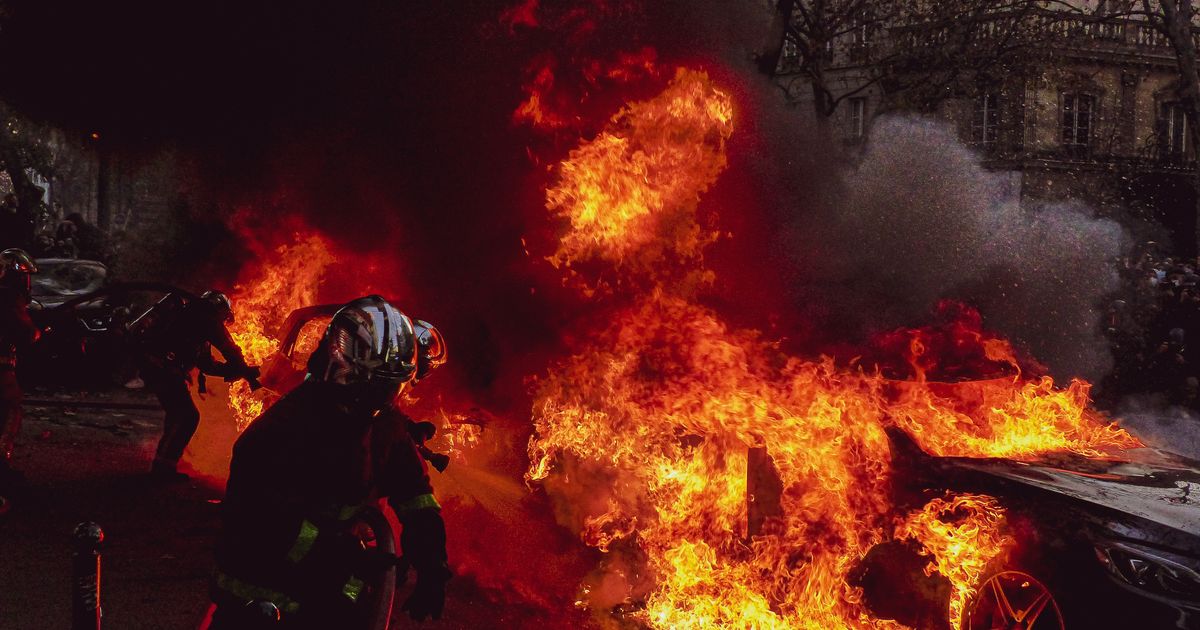
The wave of unrest began with nationwide demonstrations on Saturday (17/10/2026) that were initially peaceful, demanding intervention over soaring living costs, fuel and food prices, and public services. The demonstration turned volatile when masked rioters infiltrated, looting luxury boutiques and department stores in Paris, and setting fire to public buildings, including the historic city hall of Limoges.
More than 2,500 people have been detained since the weekend, 67 imprisoned, and nearly 1,000 security personnel injured. At least 3,000 shops suffered damage, resulting in hundreds of millions of euros in losses. President Emmanuel Macron acknowledged government response failures during an address on Sunday evening. Amid the situation, the UEFA Champions League match between PSG (Paris Saint-Germain) and Barcelona at the Parc des Princes was confirmed to proceed as scheduled.


No comments yet. Be the first!