
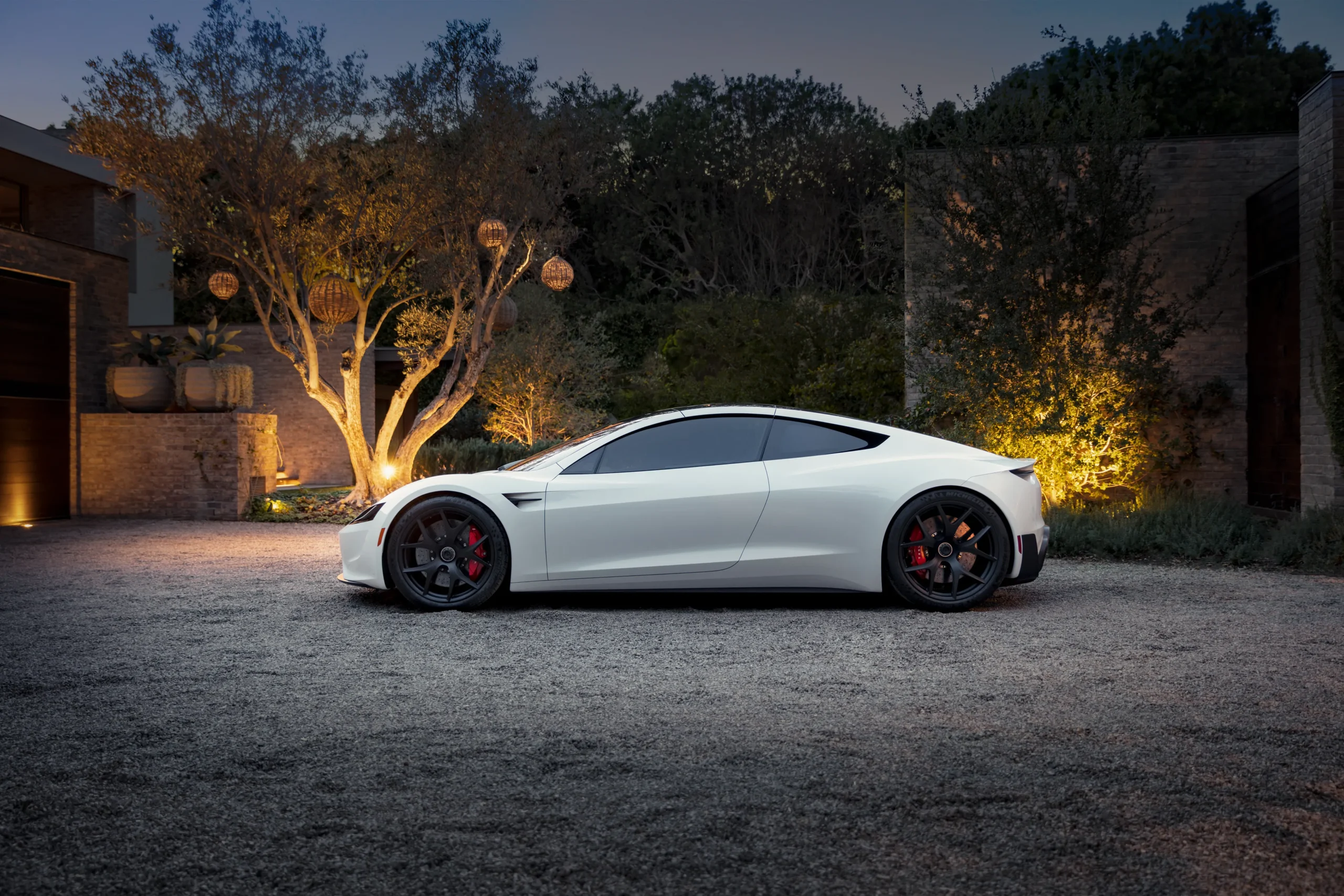
Nine Years Waiting, the Roadster Is Reborn
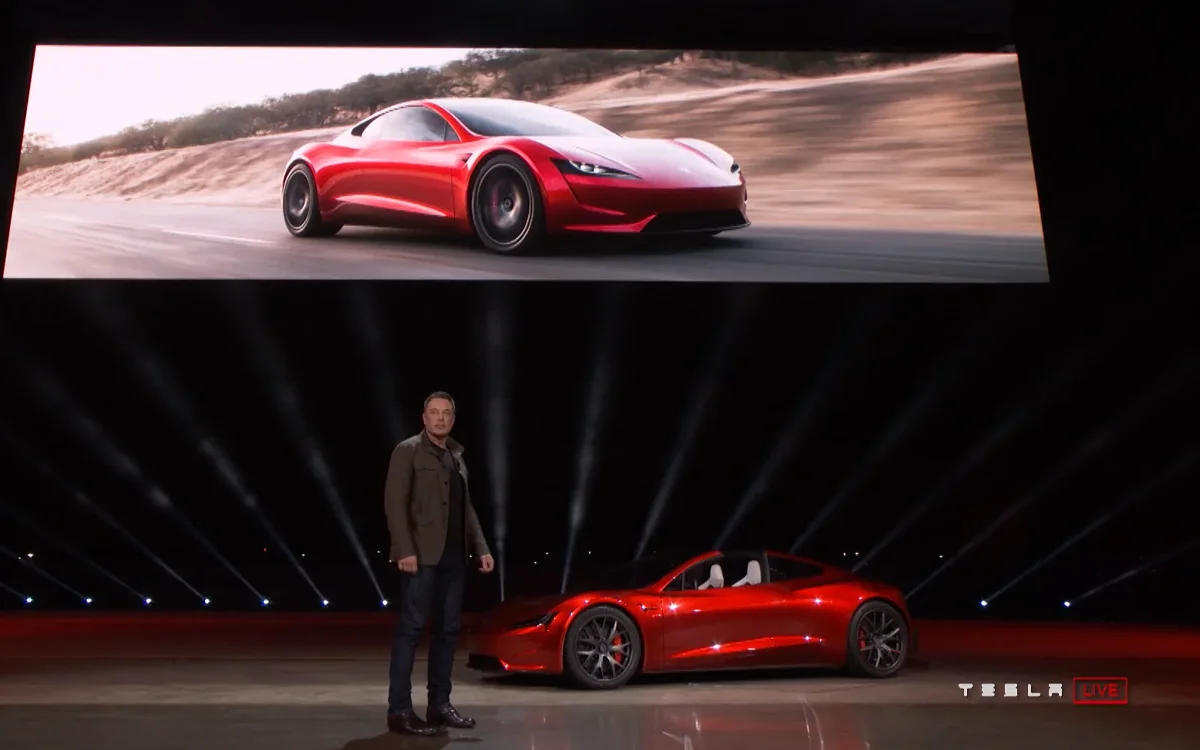
Tesla has ended a long wait for fans. On Thursday (10/15/2026), Elon Musk introduced the redesigned second-generation Roadster at the SpaceX test site in McGregor, Texas — nearly nine years after the 2017 prototype with its never-materialized 2020 delivery promise.
Musk announced production starts in 2028. The two-seater developed with SpaceX is positioned as Tesla's first "halo car" — a vehicle to showcase the company's best engineering, Morningstar analyst Seth Goldstein said.
Upside Down, Hovering, Spinning Mid-Air
The highlight was the demonstration of the new Roadster driving upside down on a ramp using an underbody suction system, then spinning in the air and landing smoothly with its internal thrusters. In another stunt, the car lifted off and cleared a row of parked Tesla vehicles.
According to Tesla engineering vice president Lars Moravy, 10 nozzles connected to 600 liters of compressed air lift and spin the vehicle; the tank is rechargeable.
Three Trims, Sharpest 0-60 mph in 0.59 Seconds
The Performance trim, a road-use two-seater, combines active aerodynamics and a multi-mode suction system with a claimed 0-60 mph under 1.6 seconds. The Thrust adds rear cold-gas thrusters for track use (under 0.9 seconds).
At the top sits the Rocket: a single seat with perimeter cold-gas thrusters for forward, upward and rotational acceleration. The claims: 0-60 mph under 0.59 seconds, top speed above 230 mph (370 km/h), range over 300 miles (483 km). Street legality is unclear.
A Symbol, Not the Money
Musk has since 2023 called it a "small potato situation". Goldstein estimates 2,000 units per year — a fraction of the 1.6 million sold last year.
The launch underscores Tesla's shift toward AI-led autonomy and robotics. This year Tesla stopped selling the Model S and X for Optimus humanoid robot production, and launched the Cybercab — a two-seat robotaxi with no steering wheel, pedals or mirrors.


No comments yet. Be the first!