
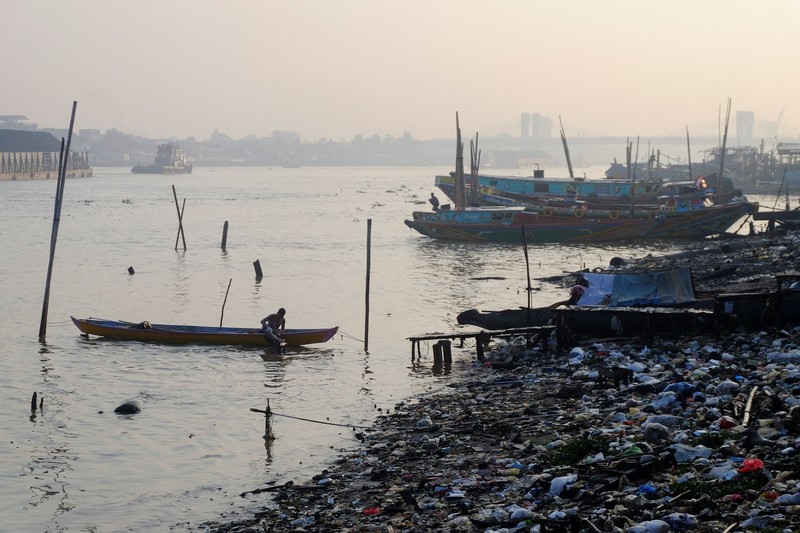
The government applied dry ice seeding technology to help curb the haze caused by forest and land fires (karhutla) in South Sumatra. The first expansion was held on Thursday (15/10/2026) by targeting the city of Palembang and Ogan Comering Ilir district (OKI). Dry ice material was prepared in part in Palembang and in part in Lampung.
A total of 1.5 tons of dry ice — carbon dioxide in solid form — was dispersed from the air using the Cessna 208 Caravan aircraft. The operation was centered at Sri Mulyono Herlambang Air Force (Lanud) Indonesian National Armed Forces (TNI) Base, Palembang, which was directly reviewed by Minister of Political and Security Coordinator (Menko Polkam) Dudung Abdurachman with South Sumatra Governor Herman Deru a day earlier.
Dry ice sublimated in the air is expected to push the mass of smoke trapped in the lower layer of the atmosphere to rise, so that the air can move more smoothly and the smoke fog is likely to spread by the wind.
This activity is a follow-up to President Prabowo Subianto’s direct instructions to accelerate the handling of the impact of karhutla.The President called for new innovations to be used to deter smoke, at least in strategic locations such as airports and TNI air bases.
Palembang became a priority because of the impact of smoke fog that interferes with public activity, health, to aviation safety. While OKI became the target because it is one of the sources of smoke. Government targeted viewing distance in Palembang increased from a range of 1,000 meters to about 5,000 meters.
This dry ice method differs from the Weather Modification Operation (OMC) that has been used. If the OMC aims to stimulate rainfall to extinguish the point of fire, the dry ice technology focuses on decommissioning the smoke fog that has been accumulating in the cities. South Sumatra became the first test site in Indonesia. When the results are effective, the government has the opportunity to implement similar methods in other areas affected by karhutla, such as Central Kalimantan.
The effectiveness of this technology still needs to be demonstrated in the field. Its success depends on the atmospheric conditions at the time of sowing, including wind speed and stability of the air layer. The government said conventional weather modification operations were continued while waiting for the results of the dry ice test evaluation.

No comments yet. Be the first!