

JCI Plunges to 5,863, All Sectors in the Red
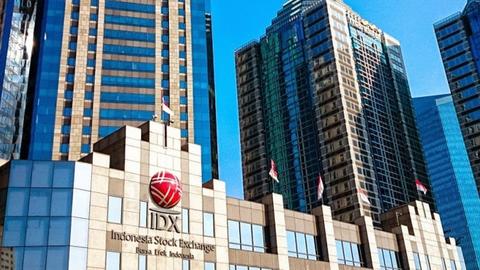
The Jakarta Composite Index (IHSG) closed sharply lower in Thursday's trading session (15/10/2026). According to data from the Indonesia Stock Exchange (BEI) via RTI Business, the IHSG lost 79.24 points, or 1.33 percent, to close at 5,863.78.
Selling pressure was already felt from the opening bell. In the first session, the JCI briefly plunged 2.16 percent to 5,814.72, even touching its intraday low of 5,811.19, or down 2.22 percent, at 2:02 p.m. WIB. Not a single sectoral index managed to stay in the green.
Selling pressure appeared evenly distributed. A total of 567 stocks weakened, while only 108 stocks gained and 120 stocks were stagnant. Transaction value reached Rp13.52 trillion with a volume of 35.25 billion shares.
With this closing position, the JCI is moving further away from the psychological level of 6,000. The index had actually left that level since the start of the week, specifically on Monday (12/10/2026) when it closed at 5,936. There was an attempt at a rebound on Wednesday (14/10/2026) to 5,943, but Thursday's trading only deepened the correction.

US Inflation at 3.7 Percent Becomes the Main Culprit
The main trigger for the correction came from the United States (US). The US Bureau of Labor Statistics reported that the September 2026 consumer price index (CPI) rose 3.7 percent year-on-year (YoY), exceeding market expectations of 3.6 percent and up from 3.4 percent in August. A 9.1 percent monthly surge in gasoline prices was the main driver of the inflation increase.
Hotter-than-expected data quickly reversed market expectations for the direction of the US central bank's (The Federal Reserve/The Fed) monetary policy. "This hotter-than-consensus inflation release quickly reversed expectations for The Fed's monetary policy," Senior Market Analyst at Mirae Asset Sekuritas Indonesia, Nafan Aji Gusta, told Kontan, Thursday (15/10/2026).
The market is now once again pricing in the possibility of a Fed rate hike at the October 28, 2026 meeting, with a probability of around 32.7 percent based on the CME FedWatch Tool. The shift in expectations was reflected in the US bond market, with the two-year US Treasury yield rising 0.27 percent to 4.806 percent.
Middle East Escalation Drives Up Oil Prices
Beyond US inflation, escalating conflict in the Middle East is adding pressure to the markets. Retaliatory strikes between the Houthi group and the Saudi-led coalition targeting energy facilities and airports in Riyadh and Dhahran are heightening uncertainty over global energy supplies.
Brent crude oil prices rose 0.45 percent to US$106.17 per barrel, while West Texas Intermediate (WTI) crude gained 1.07 percent to US$95.17 per barrel. The rise in energy prices has raised concerns about adding to global inflationary pressures if it proves sustained.
Analyst: Beware of Further Correction
Head of Retail Research at MNC Sekuritas, Herditya Wicaksana, assessed that the IHSG correction was in line with global market movements and the majority of Asian bourses following the release of US inflation data. Japan's Nikkei 225 index even plunged 4.69 percent, while Hong Kong's Hang Seng and the Shanghai Composite also weakened by more than 1 percent.
According to Herditya, The Fed's hawkish stance could push up US Treasury yields and trigger foreign capital outflows from emerging markets, including Indonesia. Technically, today's weakening has broken through the 5,850 support area, so the risk of further correction needs to be watched by market participants.
BRI Danareksa Sekuritas analysts added that the strengthening US dollar could pressure the rupiah and increase the risk of foreign fund outflows from emerging markets. In the Asian region, South Korea's Kospi index plunged 7.57 percent, the Shanghai Composite fell 1.98 percent, and the Hang Seng weakened 1.47 percent. Analysts also highlighted China's strengthening trade data through a September trade surplus of US$133.53 billion, which supports demand for Indonesian commodities, although its impact on the IHSG was held back by negative global sentiment.



No comments yet. Be the first!